Description
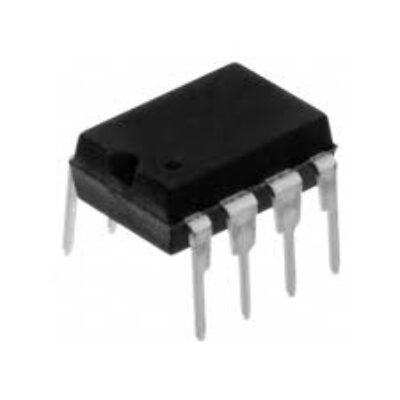
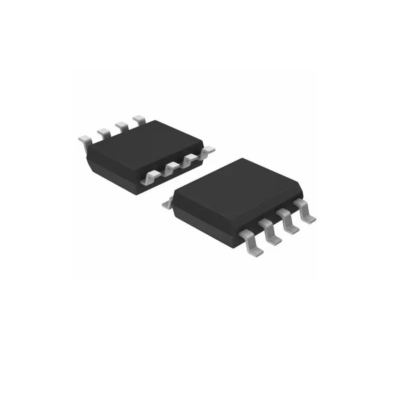
23K256 SMD SOP-8 Serial SRAM Specifications, Benefits, and Usage Guide
Specifications:
- Memory Type: Serial SRAM (Static RAM)
- Capacity: 256 Kbit (32 KB)
- Interface: SPI (Serial Peripheral Interface)
- Operating Voltage:
- 1.8V to 3.6V (Low-voltage operation)
- Operating Current:
- 1 mA (Typical Read/Write)
- 1 µA (Standby Mode)
- Clock Speed:
- Operating Modes:
- Byte Mode (Single-byte read/write)
- Sequential Mode (Continuous read/write)
- Page Mode (Improved performance by reducing command overhead)
- Endurance:
- Unlimited Read/Write cycles (Unlike Flash memory, no wear-leveling required)
- Data Retention:
- As long as power is supplied (Volatile Memory)
- Package:
- SMD SOP-8 (8-pin Small Outline Package)
- Operating Temperature:
- -40°C to +85°C (Industrial-grade)
Benefits of 23K256 SRAM:
- High-Speed Memory:
- Faster than EEPROM/Flash memory for temporary data storage.
- Unlimited Read/Write Cycles:
- Unlike EEPROM, it does not wear out with repeated writes.
- SPI Interface:
- Reduces pin count and simplifies circuit design.
- Low Power Consumption:
- Ideal for battery-powered devices.
- Flexible Data Storage:
- Supports Byte, Page, and Sequential modes for efficient memory access.
Usage Guide:
1. Pinout (SOP-8 Package):
| Pin |
Name |
Description |
| 1 |
CS |
Chip Select (Active Low) |
| 2 |
SO |
Serial Data Out (MISO) |
| 3 |
WP |
Write Protect (Active Low, Tie to VCC if not used) |
| 4 |
VSS |
Ground (0V) |
| 5 |
SI |
Serial Data In (MOSI) |
| 6 |
SCK |
Serial Clock |
| 7 |
HOLD |
Hold (Pause communication, Tie to VCC if not used) |
| 8 |
VCC |
Power Supply (1.8V to 3.6V) |
2. How to Connect to a Microcontroller (Example: ESP32, Arduino, STM32)
- SPI Connection Example:
- CS → Any GPIO pin (e.g., D10 for Arduino)
- SO (MISO) → MISO of MCU
- SI (MOSI) → MOSI of MCU
- SCK → SCK of MCU
- WP & HOLD → Pull-up to VCC if not used
- VCC → 3.3V
- GND → Ground
3. Example Code for Arduino (SPI Communication)
Explanation:
- The code writes 0x55 to address
0x0000 in SRAM.
- Use
SPI.transfer(0x03) to read from SRAM.
Applications of 23K256:
- Data Logging:
- Temporary storage for sensor data.
- Buffering for Communication:
- Store incoming/outgoing data for UART, SPI, or I2C.
- Display Buffers:
- Used for LCD, OLED, and LED matrix frame buffering.
- Audio Processing:
- Temporary storage in digital sound systems.
- Gaming and Embedded Systems:
- Fast access memory for temporary variables.
- Machine Learning and AI:
- Temporary RAM for model execution.
Conclusion
The 23K256 SPI SRAM is an excellent choice for applications requiring fast, temporary storage with unlimited read/write cycles. It integrates easily with Arduino, ESP32, STM32, and Raspberry Pi using SPI.






Reviews
There are no reviews yet.